
TL;DR
- Strategy beats scale: Win neighborhood searches vs. competing with Zillow on city terms.
- Map Pack > Organic:Google Business Profile optimization drives more qualified leads than traditional rankings.
- Depth beats breadth: 5-10 high-value locations outperform 50 thin pages.
- Update > create: Improving existing pages delivers faster results than publishing new ones.
- IDX is your enemy: Most real estate sites have duplicate content issues that kill SEO. You need workarounds.
- White label = scalability:Agencies scaling past 5 real estate clients need external fulfillment to maintain quality.
Introduction
Most real estate SEO content is written as if property searches behave like restaurants or plumbers.
They don’t.
Real estate search is:
- Hyper‑local but high‑consideration
- Dominated by aggregators (Zillow, Realtor.com, Redfin)
- Driven by neighborhoods, not services
- Influenced as much by trust signals as rankings
That’s why many agencies struggle to make real estate SEO profitable even when they understand local SEO fundamentals.
This guide is written specifically for marketing agencies that want to sell real estate SEO with confidence, deliver consistent lead flow (not just traffic), and scale accounts without building a fragile in‑house team.
It’s not a beginner’s SEO checklist. It’s a strategy and delivery playbook built around how buyers actually search for homes and how agencies actually make money.
Why Local SEO Works Differently for Real Estate
Local SEO does work for real estate, but not for the reasons most agencies assume. In most local niches, SEO success is driven by service‑based keywords, Google Business Profile dominance, proximity, and reviews.
Real estate flips that model. Here’s what’s different:
1. Search Intent Is Exploratory, Not Transactional
Buyers rarely search for “best real estate agent near me” first. They search for “2 BHK in North Seattle,” “homes for sale in Fremont” and “best neighborhoods in Bellevue for families.”
Agent discovery happens after neighborhood discovery.
2. Aggregators Absorb Demand at the Top
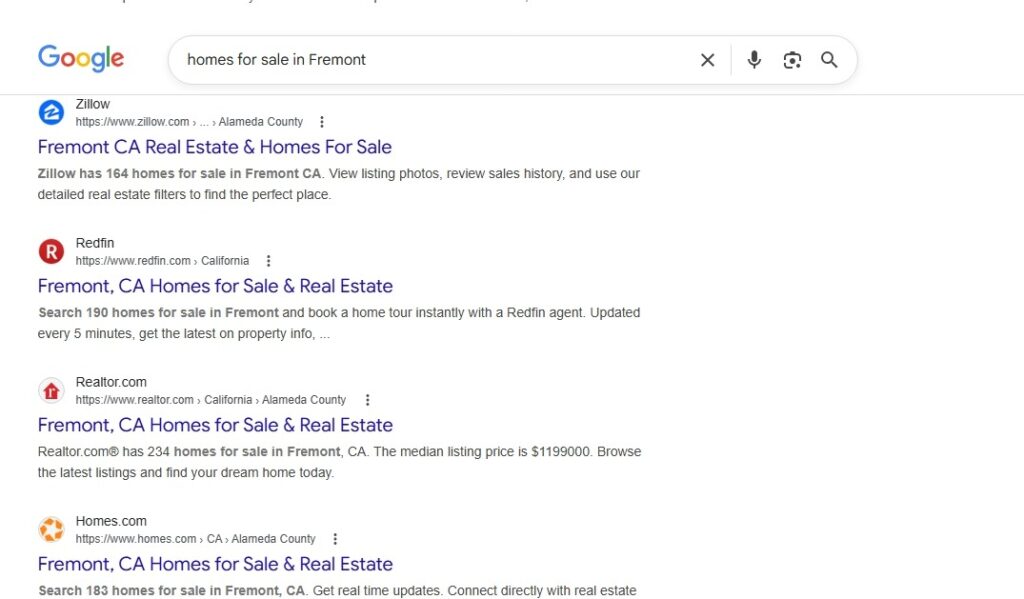
Zillow and Realtor.com rank because they own massive IDX‑driven inventories, publish at neighborhood scale, and earn links naturally from media and data citations. Trying to outrank them head‑on is a losing strategy for most agencies.
Winning agencies work around them, not against them.
3. Trust Signals Matter More Than Raw Rankings
A real estate lead is high-value, high-risk, and emotionally loaded. That means reviews, local authority, content depth, and brand familiarity often outweigh being #1 for a keyword.
Local SEO for real estate is less about “ranking pages” and more about owning micro‑markets.
The Strategic Foundations of a Winning Real Estate SEO Program
Before tactics come alignment. Agencies that succeed in real estate SEO share three strategic decisions:
1. They Sell Market Ownership, Not Keyword Rankings
The pitch is not “We’ll rank you for ‘real estate agent in [city].’”
The pitch is “We’ll help you become the most visible expert for the neighborhoods you want to dominate.”
This reframes SEO from a commodity into a growth asset.
2. They Design for Scale from Day One
Real estate SEO fails when it’s over‑customized or tied to one‑off technical setups.
Winning agencies build repeatable systems that work across cities, states, brokerages and individual agents.
3. They Separate Strategy from Execution
The agency owns market strategy, page architecture, conversion logic, and client communication. Execution can and should be standardized. This is where white‑label SEO delivery becomes a competitive advantage.
Core Pillars of Real Estate SEO
PILLAR 1: Market Strategy (What Should You Target?)
This is about how to position real estate clients for winnable searches.
Why Competing With Zillow Is a Waste of Everyone’s Time
Zillow, Realtor.com, and Redfin win on sheer scale. Decades-old domains, millions of pages, endless backlinks and massive brand trust.
You do not out-content them. You out-local them.
Their weakness is depth. Your clients live in neighborhoods. They know streets, schools, price swings, and buyer behavior at a level portals never will. That’s where you win.
Independent agents and boutique brokerages belong in the neighborhood tier of the market, not fighting national portals for city-wide terms. Position them there.
How to Pick Keywords That Can Actually Rank
If you’re targeting “homes for sale in Seattle,” you’re easily going to lose money because Zillow already owns this. Same for broad “real estate agent” terms.
Real wins come from intent-driven, hyperlocal combinations that include neighborhood, property type, buyer context, and service. That’s the simple formula.
Target local keywords like “Capitol Hill luxury condos real estate agent,” “Queen Anne family homes near schools” or “Ballard waterfront properties specialist.” Think of searches that sound like someone ready to buy, not someone killing time.
Also, fewer pages done deeply will outperform dozens of thin ones every time.
City vs. Neighborhood Targeting
Rule: Fewer, deeper pages outperform broad, thin coverage.
- Solo agent: 3–5 neighborhoods
- Boutique brokerage: 8–12 neighborhoods
- Multi‑market team: City hubs & priority neighborhoods
- Large brokerage: Regional clusters & neighborhood depth
Competitive Landscape Mapping
Before launching campaigns, audit:
1. Map Pack Competition (most critical)
- Search “[neighborhood] real estate agent” on mobile
- Who owns positions 1-3 in the local pack? How many reviews do they have?
2. Organic SERP Analysis
- What types of pages rank? (portals, agents, informational)
- Are there agent-owned sites in the top 10?
- What’s the content depth?
3. Service Area Saturation
- How many agents actively optimize for this area?
- Are there gaps in specific property types or buyer personas?
Quick Win: If you find neighborhoods with fewer than five properly optimized agent sites, congratulations, you’ve found your fastest ROI.
PILLAR 2: Asset Optimization (What to Build & Optimize)
Google Business Profile Is the Revenue Engine
For real estate, the Map Pack often drives more qualified leads than organic rankings. Treat GBP like a primary channel, not a checkbox. If GBP isn’t actively managed, you’re leaving deals on the table.
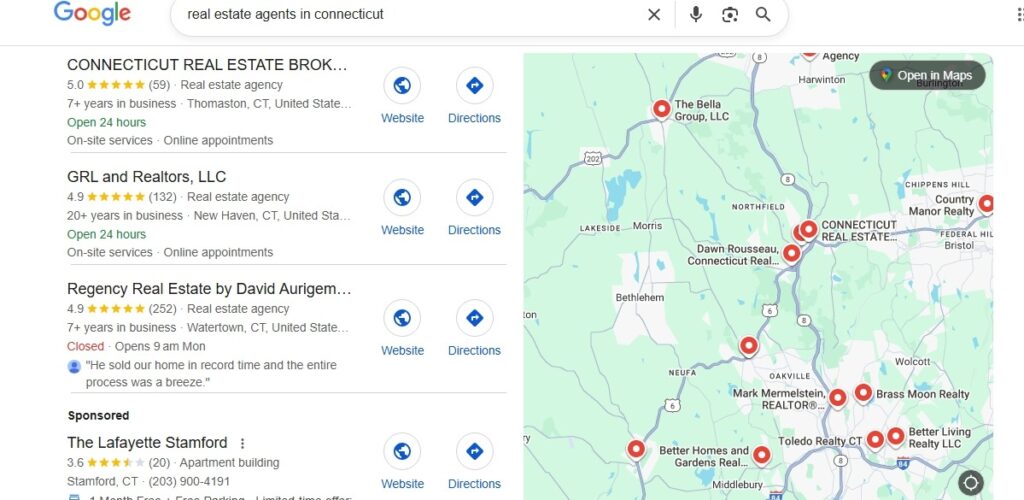
Critical GBP Elements:
1. Primary Category Selection
Category selection matters. Use “Real Estate Agency” or “Real Estate Agent.” Not “Real Estate Consultant” or generic categories.
Secondary categories: “Real Estate Appraiser,” “Property Management”
2. Service Area Definition
List specific neighborhoods, not just cities. Add 15-25 service areas (neighborhoods) and update quarterly as you expand coverage.
3. Business Description (750 character limit)
Descriptions need to sound human but still signal relevance.
| Example structure:[Agent Name] specializes in [neighborhood 1], [neighborhood 2], and [neighborhood 3] real estate. We help [buyer persona] find [property types] with deep local market knowledge. Services include [buyer representation], [seller representation], [market analysis]. Serving [city] since [year]. Licensed in [state]. Contact us for [specific neighborhood] homes, condos, and investment properties. |
4. Weekly Posts
Post new listings, market updates, neighborhood spotlights, event coverage, etc. Post frequency impacts Map Pack rankings.
5. Photo Strategy
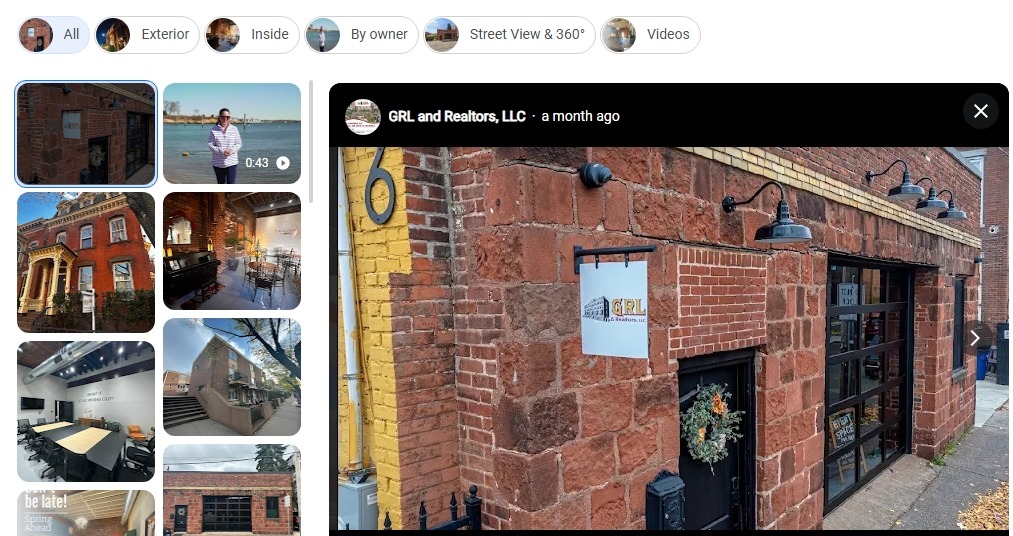
- 50+ high-quality images minimum
- Include listings, team, office, and local landmarks
- Name files: “capitol-hill-condo-listing-2026.jpg”
6. Q&A Seeding
Pre-populate with keyword-rich Q&As. For example:
- “Do you specialize in Capitol Hill condos?” Yes, we’ve sold 47 Capitol Hill condos since 2020.
- “What neighborhoods do you cover?” We serve Queen Anne, Fremont, and Ballard.
Location Page Architecture
Most real estate sites reuse the same template across every city or neighborhood. Google notices this in some time. And rankings drop quietly.
High-performing location pages are unique, data-driven, and grounded in reality. They describe the neighborhood like a local would. They include real market data (average sale price, price per square foot trends, days on market, inventory levels, year-over-year changes) that gets updated. They explain lifestyle context such as schools, transit, employers, and parks. They answer buyer questions in FAQ sections that can be marked up for schema. And they link internally to 3-5 nearby neighborhoods, relevant service pages, and market reports/blog content.
If your page could be swapped with another city by changing a few words, it’s already losing.
Internal Linking Structure That Builds Authority
Use a hub‑and‑spoke model:
- City hub page
- Neighborhood pages
- Supporting guides and comparisons
Example:
- Seattle Real Estate (hub)
- Capitol Hill Homes (spoke)
- Capitol Hill Condo Buying Guide (support)
- Capitol Hill School District Overview (support)
- Capitol Hill vs First Hill Comparison (support)
- Capitol Hill Homes (spoke)
Each neighborhood should link to 3–5 adjacent areas to reinforce topical relevance.
Schema Markup
Prioritize:
- RealEstateAgent schema (organization page)
- FAQPage schema (location pages)
- LocalBusiness schema (service pages)
Skip over‑engineering. Focus on schema that supports local intent.
The IDX Problem (And How to Handle It)
What is IDX? Internet Data Exchange – A system that lets real estate agents display Multiple Listing Service (MLS) properties on their websites.
IDX is great for users and terrible for SEO. It creates thousands of duplicate, thin pages that waste crawl budget and dilute authority.
For most agencies, the smartest move is simple: noindex IDX pages, meaning block search engines from indexing listing pages. And focus SEO on location pages and original content. Let IDX convert traffic. Don’t ask it to rank.
Advanced setups also exist, but they’re time-intensive and rarely scalable.
Technical Foundations
NAP (Name, Address, Phone) consistency needs to be exact everywhere, including Google Business Profile, website footer, all citations, and social profiles.
Mobile performance also matters because most searches happen there. Page speed target should be <3 seconds mobile load time.
PILLAR 3: Authority Development (How to Build Trust & Rankings)
Reviews Are a Ranking Factor and a Conversion Weapon
Reviews influence Map Pack visibility and whether someone calls the agent or the competitor. Passive review collection doesn’t work.
High-performing agents ask for reviews at the right moments. For example, 24 hours after closing, after first showing (for quick responses), and even on anniversaries (12 months post-purchase).
They automate follow-ups. They send direct review links. And they make it frictionless in every way possible.
Targeting three to five new reviews per month is realistic for active agents. Anything less is a process problem.
And yes, every review should get a response. It signals engagement to Google. And prospects watch it too.
| Pro Tip: Naturally include keywords in responses: “Thrilled we could help you find the perfect Queen Anne family home!” |
Local Link Building Strategies
Local link building for real estate doesn’t work like traditional SEO advice pretends it does. You’re not chasing mass guest posts or sketchy link swaps. You’re building local authority the boring, offline-first way that actually moves rankings. And one authoritative local link beats dozens of directories.
Some high‑impact opportunities include:
1. Local Sponsorships: Youth sports teams, school fundraisers, neighborhood festivals, charity events. Most include a website link and local press coverage.
2. Chamber of Commerce & Associations: Local Chamber of Commerce membership (directory link), state or local real estate boards, business networking groups (BNI, etc.).
3. Community Involvement: Neighborhood association websites, local nonprofit boards, community event calendars.
4. Local Media & PR: Market trend commentary, neighborhood guides for local publications, expert quotes in city magazines.
5. Local Business Partnerships: Mortgage brokers, home inspectors, interior designers, moving companies, title companies. It includes cross-promotion and reciprocal linking.
6. Resource Page Link Building Find pages like “moving to” guides, real estate resource pages, and curated local business lists. Outreach offering to be listed.
Citation Building
Citations are where most real estate SEO falls apart. Citations are simply consistent mentions of your business name, address, and phone number (NAP) across the web.
Tier-one platforms like Google Business Profile, Yelp, Facebook, Zillow, Realtor.com, Trulia, and Homes.com are non-negotiable. If these are wrong, nothing else matters.
Tier-two platforms like YellowPages, Better Business Bureau (BBB), Bing Places, Apple Maps, and MapQuest help reinforce trust and coverage.
Tier-three citations come from local directories, city-specific sites, and neighborhood blogs. They don’t scale beautifully, but they send strong local relevance signals.
Here’s the rule most people ignore: consistency matters more than quantity. Twenty perfect citations will outperform a hundred sloppy ones without breaking a sweat.
PILLAR 4: Performance & Scale (How Agencies Deliver & Grow)
Metrics That Matter (And Ones to Ignore)
Total keywords tracked? Irrelevant.
Domain authority? Cute, not useful.
What matters is Map Pack visibility, GBP engagement, organic traffic to location pages, qualified leads, and, if possible, closed deals tied back to organic search.
Realistic Timelines:
| Timeframe | Expected Results |
| 30-60 days | GBP fully optimized, citations built |
| 60-90 days | Map Pack visibility improving (positions 4-7) |
| 90-120 days | First Map Pack placements (positions 1-3) |
| 4-6 months | Consistent Map Pack presence, organic traffic increasing |
| 6-12 months | Multiple Map Pack rankings, steady lead flow |
How Agencies Package Real Estate SEO Profitably
Real estate SEO should cost more than generic local SEO due to its complexity.
Most agencies succeed with tiered packages that scale from foundation work to authority building, with add-ons for additional locations, IDX handling, and reputation management.
If you’re pricing this like a plumber’s local SEO package, you’re undercutting yourself.
Also Read: White-Label vs Freelancers vs In-House SEO: Cost Comparison
When White‑Label Delivery Model Becomes the Smart Move
Once you’re managing five to seven real estate clients, in-house fulfillment starts cracking. Content volume explodes. GBP management multiplies. Reviews pile up. And reporting gets messy.
White-label works because you keep strategy, pricing, and client relationships in-house and outsource execution that doesn’t need to touch the client. Partner handles content creation, technical optimization, citation and review management, and reporting.
The math usually favors white-label by a wide margin. Agencies that outsource real estate SEO execution while owning strategy scale faster and more profitably.
Real Estate SEO in 2026: What Agencies Need to Know
Despite constant algorithm noise, the fundamentals of real estate SEO are surprisingly stable.
Here’s what’s changing and what isn’t.
What’s Changing
1. Aggregators will get stronger, not weaker
Expect Zillow and similar platforms to expand neighborhood content, AI summaries, and local SERP features. Agencies must stop treating them as competitors and start treating them as demand indicators.
2. Thin location pages will quietly die
Google is getting better at detecting rewritten templates, shallow neighborhood pages, and AI‑generated content without lived insight. Depth and differentiation will matter more than volume.
3. Reviews and brand signals will influence SEO indirectly
Not just because Google says so but because users do. Higher trust means higher engagement which means better long‑term performance.
What Isn’t Changing
- Neighborhood‑level intent will remain dominant.
- GBP will still matter but won’t carry the strategy alone.
- Content quality will continue to beat technical gimmicks.
Agencies that build durable systems (not hacks) will win.
Why White Label Is Built for Real Estate SEO
Real estate SEO is a scale problem disguised as a strategy problem.
Consider what agencies need to deliver consistently:
- Dozens of neighborhood pages
- Ongoing content updates
- Local citations and cleanup
- Review workflows
- Technical SEO across multiple sites
Doing this in‑house means high fixed costs, talent churn, and inconsistent quality.
White‑label delivery flips the economics.
What agencies keep in‑house
- Strategy and market selection
- Client relationships
- Reporting and insights
- Pricing and positioning
What gets standardized (white label)
- Content production
- On‑page SEO
- Local SEO execution
- Technical hygiene
For real estate specifically, white‑label models allow agencies to price retainers confidently and maintain margins at scale. Ultimately, they say yes to more markets without risk.
Also Read: Reasons why you should Outsource Local SEO for Business Growth
How to Choose the Right White Label Real Estate SEO Partner
Not all white‑label providers understand the real estate market. You should look for agencies with real estate SEO specialization (not generic local SEO) and understanding of IDX, MLS and Map Pack dynamics.
Use this checklist as the first step in asking questions to potential partners before committing:
1. Do they understand neighborhood‑level SEO?
Ask for sample neighborhood pages, evidence of non‑templated structure, and proof of local search performance.
2. Can they support scale without quality loss?
Look for standardized workflows, dedicated QA processes, and clear turnaround SLAs.
3. How do they handle client reporting and communication? Are they agency‑first?
The right partner stays invisible, supports your pricing model, and adapts to your reporting needs.
Some deeper questions you can ask include:
- How do they handle IDX duplicate content issues?
- What’s their process for creating unique location pages?
- How do they approach Map Pack optimization differently than organic?
- What’s their average time to Map Pack placement?
White‑label should feel like an extension of your team, not a vendor you manage daily.
Conclusion
Real estate local SEO is about the right strategy, the right assets, authority, and scale.
Strategy: Position for neighborhood wins, not Zillow battles.
Assets: Build unique, data-rich location pages and optimize GBP.
Authority: Generate reviews and build local links consistently.
Scale: Use white-label support to grow without breaking your team.
The agencies that win treat real estate SEO as a specialized discipline, not generic local SEO with a real estate logo. With the right structure and the right delivery model, real estate SEO becomes one of the most predictable, profitable offerings an agency can sell.
Ready to scale your real estate SEO offering?
Justwords specializes in white-label SEO for marketing agencies serving real estate clients. We handle content creation, technical optimization, and monthly reporting, so you can focus on client relationships and growth.
Learn more about our White Label SEO Services.
FAQs
What is the most important factor in local SEO for real estate?
Clear location relevance is key. Search engines need to understand where a realtor operates and what areas they serve. Location-specific pages, consistent business details, and locally relevant content help build that clarity over time.
How can I compete with Zillow using real estate local SEO strategies?
Don’t compete on their terms. Competing directly on broad keywords is difficult, but local and niche searches create opportunities. Focusing on neighbourhood-level content, local insights, and service-based pages helps realtors appear for more specific, high-intent searches.
What are the best long-tail keywords for real estate agents?
Long-tail keywords usually combine service, property type, and location. Examples include area-specific listings, agent services in a neighbourhood, or property searches tied to landmarks, commute options, or lifestyle needs.
How does white-label real estate SEO help marketing agencies?
White-label real estate SEO allows agencies to scale content and technical SEO optimisation work without expanding internal teams. It helps maintain consistent delivery, meet client expectations, and support multiple real estate business accounts simultaneously.
Why is Google Business Profile crucial for realtors?
Google Business Profile improves visibility in Google Maps and local search results. It helps realtors appear for nearby searches, showcase reviews, and provide accurate business details that support trust and local relevance.
How long does it take to rank a real estate website locally?
Local SEO results usually take a few months to show. Timelines depend on competition, content quality, and consistency. Realistic timeline: 60-90 days for initial movement in low-competition neighborhoods, 4-6 months for competitive areas. Variables: starting review count, citation foundation, competitor strength, and GBP optimization quality. Steady updates and accurate local signals tend to improve visibility gradually rather than overnight.
What content works best for real estate SEO?
Content that explains local areas, answers common buyer or seller questions, and provides practical insights tends to perform well. Neighbourhood guides, pricing explainers, and comparison content often attract steady organic traffic.
Should I use a specific schema markup for real estate listings?
Schema markup helps search engines understand property details better. Using relevant real estate or local business schema can improve how listings and business information appear in local search results. Priority order: (1) RealEstateAgent schema on organization pages, (2) FAQPage schema on location pages for featured snippets, (3) LocalBusiness schema on service pages. Product/Offer schema on individual listings only if you’re enhancing IDX content.
How do white-label partners handle local citations for realtors?
White label partners usually manage citations by ensuring consistent business details across directories. This includes accurate names, addresses, and contact information, which supports local trust and Google search visibility.
Is blogging still effective for real estate SEO in 2026?
Blogging remains effective when content is useful and locally relevant. Blogs that answer real questions, explain neighbourhoods, or support location pages continue to play a role in long-term SEO performance.
Also Read: The Ultimate Guide to Using White Label Services to Scale Your Agency