
TL:DR
- Most link building fails by focusing on DA and quantity instead of relevance and traffic.
- High-quality, niche-relevant links from real sites outperform bulk backlinks.
- Organic traffic is the strongest indicator of link value and SEO impact.
- Transparency in outreach and placements prevents penalties and wasted spend.
- Great link building drives long-term rankings; poor tactics risk penalties and zero results.
Your client’s backlink report looks impressive: 50 new links, average DA 45, all followed, diverse anchor text. Three months later, their rankings haven’t moved. Worse, they’re getting manual action warnings from Google.
This scenario plays out daily for agencies more than they admit. This is because most link-building campaigns optimize for metrics that don’t matter (Domain Authority, link quantity, speed) while ignoring the signals Google actually uses to determine link value (topical relevance, organic traffic, and editorial context).
The difference between good and great link building isn’t what most agencies think. Here’s what actually separates campaigns that drive rankings from those that waste budgets and risk penalties.
Also Read: Eliminate SEO Stress by Outsourcing Your Link-Building
Why Most Link Building Campaigns Fail
To understand what separates great from good, you have to understand the metric problem at the core of most campaigns.
The DA Obsession Problem
Walk into any agency link-building conversation, and within five minutes, someone will say, “DA 40 or above.” Domain Authority is a Moz metric. Domain Rating is an Ahrefs metric. Google uses neither.
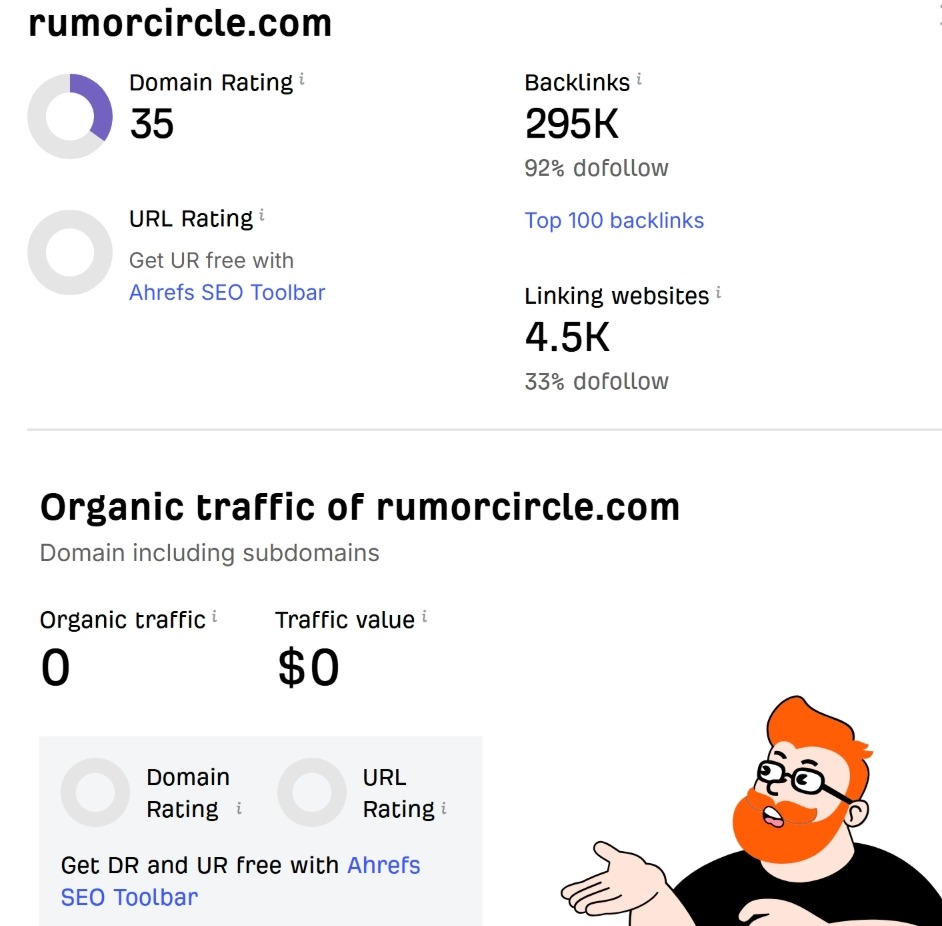
A site can accumulate DA 60 through purchased links and link schemes while having zero organic traffic and no real topical authority in any subject area. Google has already figured this out. It ignores those links, or worse, it penalizes the sites pointing them at your client. What Google actually values is topical relevance, organic traffic, and editorial context.
Real Example:
In August 2025, we onboarded an agency client whose eCommerce brand had just been hit with a manual action. Three months earlier, they had run a “successful” link-building campaign: 38 new backlinks, all from DA 40–60 sites.
Their report looked great – diverse anchors, all dofollow links. But when we audited the profile, every single site had near-zero organic traffic and existed only to sell guest posts across random niches.
Google flagged the pattern. The penalty followed.
What happened next is what most agencies underestimate. It took us 7+ months to clean up the damage – removing links, submitting disavows, rebuilding trust signals. During that time, the site lost over 60% of its organic traffic and thousands in monthly revenue.
The Spray-and-Pray Strategy
The typical “good” campaign looks like this: buy 50 guest posts from link vendors, place them on any site accepting payment, mix the anchor text to claim a natural link profile, and report DA and link count at the end of the month.
Why does it fail? No topical relevance to the client’s industry. No organic traffic on the linking sites, meaning the link equity value is effectively zero. Google’s algorithms detect paid link patterns. And the client gets nothing – no referral traffic, no brand exposure, no ranking movement. They’re paying for quantity, and quantity without quality is just risk.
Also Read: Google AI Overview SEO: The 2026 Strategy You Need
The Good vs. Great Framework
The difference between a good link-building campaign and a great one is in the criteria used to evaluate every single placement.
| Aspect | Good Link Building | Great Link Building |
| Primary Metric | Domain Authority (DA/DR) | Organic traffic & relevance |
| Link Acquisition | Outreach to any high-DA site | Relationship-building in a niche |
| Anchor Text | Keyword-rich, optimized | Natural, contextual, brand-focused |
| Placement Context | Author bio or footer | Editorial mention in relevant content |
| Traffic Validation | Rarely checked | Every link from 5,000+ monthly traffic sites |
| Timeline | 20-50 links/month | 5-15 high-quality links/month |
| Transparency | Bulk delivery, no details | Pre-approval, full documentation |
| Risk Profile | Medium-high (paid patterns) | Low (genuine editorial) |
| Results Timeline | Quick boost, then plateau/drop | Slow build, compound growth |
| Longevity | Links removed or devalued | Permanent authority gains |
The 3 Link Building Secrets That Actually Separate Great Campaigns
Secret 1: Relevance Over Domain Authority
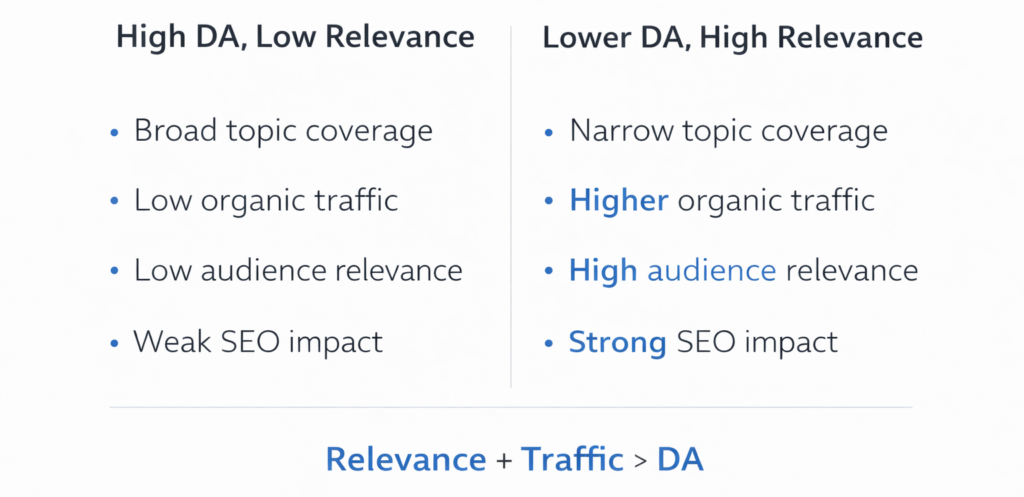
A backlink from a DR 30 industry trade publication with 10,000 monthly organic visitors will outrank a DR 70 general blog with no traffic.
The reason isn’t complicated. Google’s algorithms evaluate topical authority through semantic relationships. When a marketing automation SaaS earns a link from MarketingProfs or the HubSpot Blog, Google sees topical alignment (marketing industry), an authoritative source in a relevant field, a contextual placement inside a marketing strategy article, and an audience of marketing professionals who actually read the publication.
When that same SaaS gets a link from a DR 70 tech blog covering gaming, cryptocurrency, travel, and home improvement, Google sees none of those signals. No topical authority signal. No industry credibility. Minimal ranking impact regardless of the metric on the tin.
How to Evaluate Relevance:
Ask these 4 questions:
- Does the linking site cover your client’s industry?
- Would your client’s target audience read this publication?
- Is the link contextually relevant to the article’s topic?
- Does the site have expertise in topics related to the client’s business?
If the answer to any of those is no, the link lacks relevance regardless of the DA number the vendor is quoting.
Also Read: The Two E’s of Google EEAT: Experience vs Expertise in SEO
Secret 2: Traffic Validation as Quality Signal
This is the thing most agencies aren’t checking, and it’s the single most reliable indicator of whether a link is worth having. Organic traffic tells you one thing: Google trusts this site enough to send visitors to it. Zero organic traffic tells you the opposite. If Google doesn’t value the site enough to rank its own content, why would a link from it help you rank yours?
Here’s the traffic validation process you can follow:
Minimum Thresholds:
- National publications: 50,000+ monthly organic traffic
- Industry blogs: 5,000+ monthly organic traffic
- Niche sites: 1,000+ monthly organic traffic
How to Check:
- Ahrefs: Organic Traffic estimate
- SEMrush: Traffic Analytics
- SimilarWeb: Audience Overview
- Ask vendor: “What’s the site’s monthly organic traffic?”
However, watch out for the following red flags:
- Vendor refuses to share traffic data.
- Site has DA 50+ but <500 monthly visitors.
- Traffic comes from paid ads, not organic search.
- The traffic chart shows a recent spike (purchased traffic).
There’s a practical upside here, too. Links from high-traffic sites don’t just pass link equity; they send actual referral visitors. You’re building authority and driving potential customers simultaneously. A single placement in a well-read industry publication can send qualified traffic for years.
Also Read: Top Free SEO Tools for Keyword Research, Audit & Ranking
Secret 3: Transparency Prevents Disasters
The agencies that get their clients penalized are almost always the ones that accepted bulk link delivery with a spreadsheet of URLs and a “trust our process” from the vendor. No pre-approval. No documentation. No clarity on how the links were acquired. When the manual action arrives, they can’t explain the links because they don’t know anything about them.
Great link building looks nothing like that. Here’s what real transparency looks like:
Pre-Approval Process:
- Vendor shares target sites before outreach.
- Agency reviews for relevance and traffic.
- Client approves link placements.
- No surprises or “trust us” bulk delivery.
Full Documentation:
- Outreach email templates shared.
- Editorial conversations documented.
- Payment relationships disclosed (if sponsored).
- Ongoing monitoring (links sometimes get removed) and replacement guarantees.
Sourcing Clarity:
- How was this link acquired? (Outreach, HARO/Qwoted, content partnership, digital PR)
- Is this a paid placement? (Disclosed vs. undisclosed is the key)
- What’s the relationship with the site owner?
- Will this link stay permanent?
This level of transparency also clarifies why quality link building is genuinely difficult to produce at scale. Building 10 properly relevant, high-traffic editorial links requires 100-200 outreach emails – a 2-5% percent success rate on a good day. It requires nurturing the relationship over weeks and sometimes months. It requires custom content creation for guest posts and data contributions. It requires editorial coordination: revisions, timing, placement context, and anchor text review. And don’t forget to maintain quality control to verify that what went live matches what was approved.
That’s 40-80 hours of work per 10 quality links. Most agencies don’t have the resources to execute this at scale, which is exactly why specialized white-label link-building partners exist.
The Risks Most Agencies Underestimate
Private Blog Networks (PBNs) Are Still Everywhere
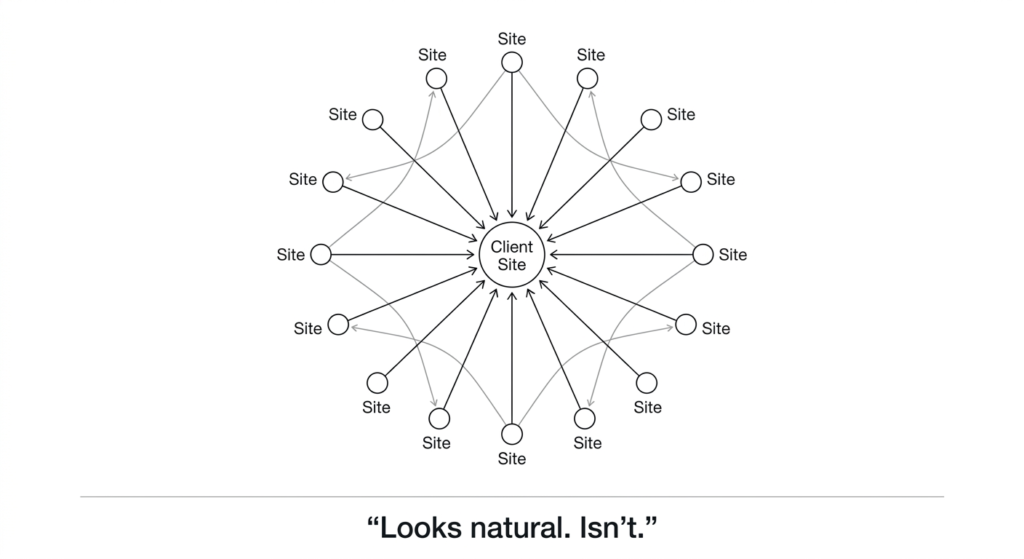
PBNs are networks of sites built for one purpose: selling links. They’re often built on expired domains that carried previous authority, dressed up with thin content to look like real publications. The vendor pitch sounds clean – guaranteed placements, fast turnaround, reasonable pricing. Those are exactly the warning signs.
How to Spot Them:
- Vendor offers “guaranteed placements” with 48-hour delivery
- Pricing is suspiciously low ($20-$100 per link)
- Won’t disclose target sites before purchase
- Sites have thin content, few pages, and no social presence
- Whois information hidden or recently registered
- Multiple sites share hosting, similar designs, and cross-link
The risk? Google’s algorithms detect PBN patterns, and when they do, the entire network gets deindexed. Your client’s backlinks vanish overnight. If Google issues a manual penalty for participating in a link scheme, recovery costs $10,000-$50,000 in disavow work, penalty removal, and authority rebuilding. A $100 link can cost $50,000 to fix.
Low-Quality White Label Services
Three phrases should end any vendor conversation immediately.
- “100 links for $500” is impossible to execute with quality standards. That pricing guarantees PBNs, link farms, or automation.
- “Guaranteed rankings in 30 days” means black hat tactics. Link building takes 3-6 months to impact rankings, and any vendor promising instant results is describing something that will work briefly and then implode.
- “No pre-approval, trust our process” means bulk delivery of unknown links on unknown sites, with no documentation of how they were acquired and no recourse when things go wrong.
The hidden cost calculation here matters. Cheap links save money upfront. But penalty recovery, disavow file creation, lost rankings, client churn, and the opportunity cost of time spent fixing problems routinely run 10 times the original savings. The agencies that learn this lesson once rarely need to learn it twice.
Go Pro: Scale With a White Label Link Building Service That Gets This Right
If you want to offer link building at scale without building an in-house outreach team, the math is straightforward.
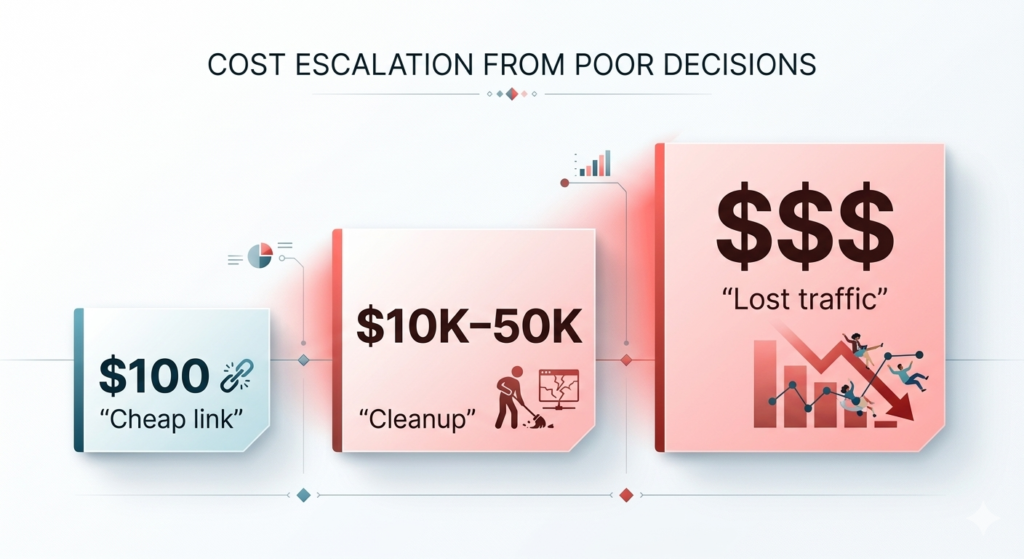
Running genuine editorial link building in-house means hiring specialized link builders at $60,000-90,000 per year each, building and maintaining industry-specific site databases, developing outreach relationships over months and years, and producing custom content for every placement. The ramp-up to producing 10-15 quality links per month per client reliably is 6-12 months, minimum.
A quality white label partner runs $1,000-$4,000 dollars per month and delivers 8-12 high-quality, traffic-validated, relevance-matched links with full pre-approval workflow and documented outreach. The partner has already built the site databases, the editorial relationships, and the outreach infrastructure. You get immediate access to that without the hiring cost or the ramp-up period.
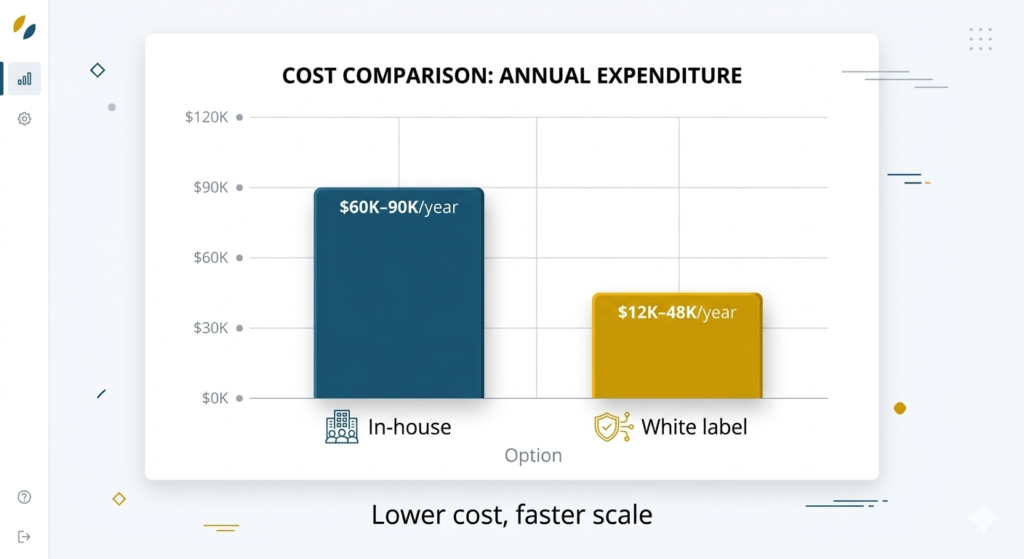
The protection math is equally clear. One penalty recovery engagement costs $10,000-50,000 in remediation alone, before you account for the lost rankings, the client relationship damage, and the time your team spends managing the crisis. A quality partner who prevents that outcome has paid for itself before delivering a single link.
When your agency grows from 3 link-building clients to 15, the in-house model requires proportional team growth with all the management complexity that brings. The right white-label partner handles 15 clients with the same infrastructure, the same quality standards, and volume discounts that reduce your per-client cost as you scale.
Also Read: White-Label vs Freelancers vs In-House SEO: Cost Comparison
Choosing the Right White Label Link Building Partner
Not every vendor calling themselves a white-label link-building service understands what that actually requires. Here’s what to ask before you commit a client to their process:
- On traffic philosophy: Ask what their minimum organic traffic threshold is for link targets. The right answer is 5,000+ monthly organic traffic verified via Ahrefs or SEMrush. If the answer is “we focus on DA 40+ sites,” they’re ignoring traffic entirely, which means they’re building the wrong links.
- On pre-approval workflow: Ask whether you can approve target sites before outreach begins. The right answer is yes, with a site list including traffic data and relevance scores. If the answer is “we deliver completed links, our process works,” there’s no transparency and no control. That’s how you end up explaining links you can’t explain.
- On outreach documentation: Ask how they acquire links and whether they can show you their outreach process. The right answer involves custom outreach, HARO responses, digital PR, and content partnerships with templates and methods they’re willing to share. “Proprietary relationships” as an answer means PBNs or undisclosed paid placements.
- On relevance matching: Ask how they ensure topical relevance to your clients’ specific industries. The right answer involves industry-specific site databases and topical alignment scoring. “We place links on general high-authority sites” is the spray-and-pray approach described above, and you already know where that leads.
- On realistic timelines: Ask how many links they deliver monthly and what the ranking impact timeline looks like. The right answer is 8-15 high-quality links monthly with ranking impact visible in 3-6 months. “50+ links guaranteed monthly” isn’t real because quality is impossible at that scale. No vendor producing genuine editorial placements through real outreach can guarantee that volume without cutting corners on everything that matters.
Read More: How to Choose a White-Label SEO Partner: Complete Evaluation Framework
Conclusion
The link-building secrets separating great campaigns from good ones aren’t complex: prioritize relevance over DA, validate organic traffic as a quality signal, and demand transparency in every placement.
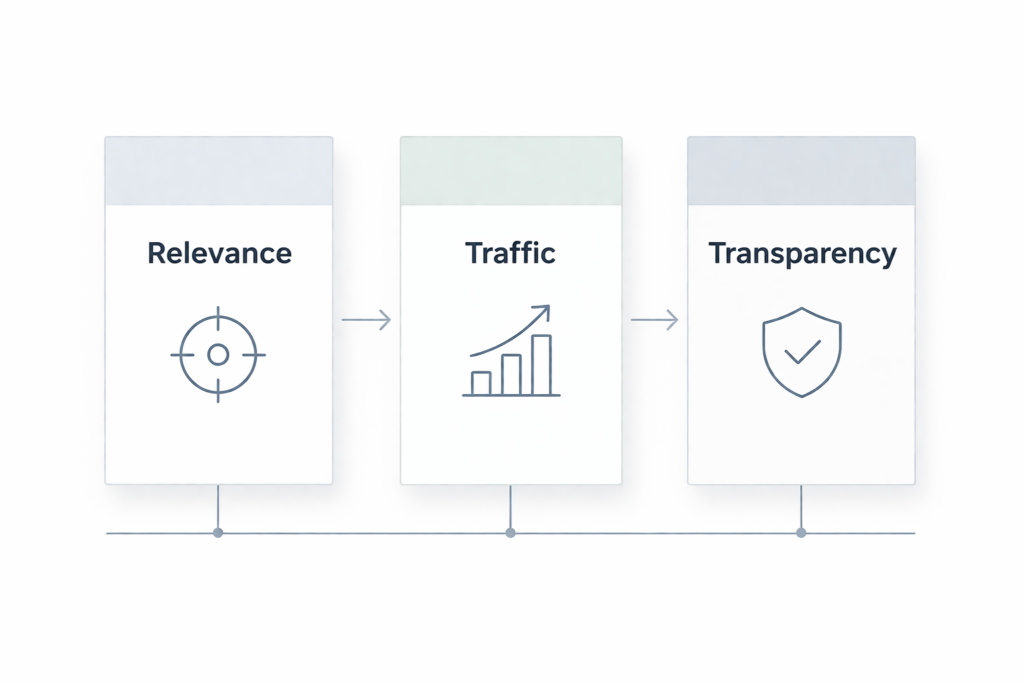
Most agencies fail because they chase surface-level metrics, use cheap vendors, and don’t understand the risks of PBNs and paid link schemes. Great link building requires relationship-building, industry expertise, and rigorous quality control that most agencies can’t resource in-house.
The right white label link building partner provides access to high-traffic, relevant placements with full transparency, building authority that compounds over years instead of cheap links that implode in months. Your choice determines whether your clients see sustained growth or penalty disasters.
At Justwords Digital, we’ve spent 15+ years doing content-led SEO and building backlink strategies that prioritize long-term authority over short-term metrics. If you want to see what that looks like, let’s talk.
Read More: A Guide on How to Build a Successful White Label Partnership
FAQs
1. What is the difference between white-label link building and buying links?
White label link building uses white hat tactics, outreach, and valuable content to earn high-quality backlinks from real sites in search results. Buying links relies on link farms or paid placements, risking penalties and damaging your link profile.
2. How do you ensure the backlinks are safe from Google penalties?
We focus on white hat link building, targeting sites with real organic traffic, strong SEO value, and relevance. No black hat links, PBNs, or spam. Every link building campaign prioritizes natural anchors, context, and long-term SEO performance.
3. Do you provide pre-approval for the websites before building links?
Yes. You review every site that links before we start. We share traffic data, relevance, and placement context so you control where each link to your site appears. Full transparency ensures a clean, trusted link building process.
4. What is the average turnaround time for a white label link building campaign?
Effective link building efforts take 3–6 months to impact SEO ranking. We build 8–12 quality links monthly through outreach and relationship building. Fast bulk links often mean bad links. Sustainable growth takes time.
5. Can I resell these link building services under my own brand?
Yes. Justwords’ white label services let you resell under your brand. You manage client relationships while we handle link outreach, placements, and execution. Your clients see you as the link building expert.
6. How does domain authority differ from organic traffic in link quality?
Domain authority is a third-party metric. Real SEO value comes from sites with organic traffic in Google’s search results. A relevant site with traffic passes stronger link equity and link juice than a high-DA site with no visitors.
7. Do you use Private Blog Networks (PBNs) in your link building strategies?
No. PBNs and link farms are black hat link building techniques that risk penalties. We use white hat tactics, outreach, and real publications to secure high-quality backlinks that improve long-term SEO performance.
8. What industries do you avoid for white label link building?
We avoid niches with high risk or low-quality link opportunities, like adult, gambling, or spammy finance. Our focus is on industries where we can build a strong, relevant link profile using ethical link building methods.
9. How many backlinks does a client need to see results?
It depends on competition and your SEO strategy. Fewer high-quality backlinks from relevant sites outperform hundreds of weak ones. Strong link building techniques and consistent efforts drive better search engine rankings over time.
10. What happens if a backlink is removed after a few months?
We monitor every existing link. If a link is removed, we attempt recovery or replace it with a similar quality link. Our focus is on stable, editorial links that continue to pass SEO value and support rankings.