

TL; DR
- Google EEAT now emphasizes Experience alongside Expertise, Authoritativeness, and Trustworthiness.
- Experience = doing, Expertise = knowing; both matters, but they serve different purposes.
- Content built around first-hand experience often outperforms purely theoretical posts.
- The sweet spot lies in combining both to signal credibility and authenticity to users and Google.
- Use the EEAT Content Audit Framework to identify which “E” your content is missing.
What Is Google EEAT in SEO?
Let’s start simple. Google EEAT stands for Experience, Expertise, Authoritativeness, and Trustworthiness, four key factors Google uses to judge content quality and credibility.
Until late 2022, it was just E-A-T. Google added the extra “E” for Experience after realizing users don’t just trust information; they trust people who’ve actually done it.
Think about it: would you take fitness advice from a trainer who’s only studied theory, or from someone who’s trained real clients and proven results? That’s exactly what the Google EEAT guidelines are designed to prioritize.
For any White label SEO Services or White Label SEO Content Services targeting global markets, understanding this shift isn’t optional, it’s the difference between ranking higher and being ignored in search results.
Why Google EEAT Matters in SEO (2026 Edition)
Search in 2026 isn’t just about keywords and backlinks anymore. Google’s evolving systems, from the Search Generative Experience (SGE) to AI-powered snippets, now prioritize human, credible, and experience-driven content.
Here’s the context: Google’s EEAT in SEO serves as Google’s framework for determining who to trust. While it’s not a direct ranking factor, it heavily shapes how your pages are evaluated and displayed.
Websites that showcase strong EEAT signals, such as real examples, case studies, and transparent author bios, consistently earn higher visibility across organic search, AI-generated results, and featured snippets.
Google EEAT Explained: The Two E’s That Most People Confuse
Here’s where most marketers get it wrong: they treat Experience and Expertise as interchangeable. They’re not.
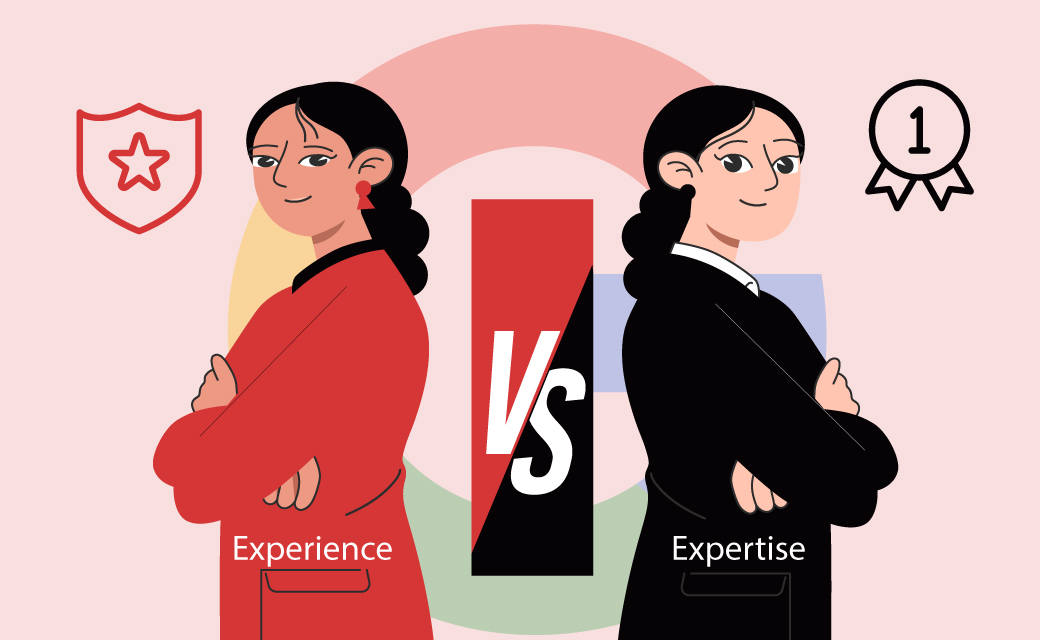
Experience is about doing, while Expertise is about knowing. Together, they shape how Google assesses credibility within Google’s EEAT framework in SEO.
And to complete the picture, Authoritativeness and Trustworthiness (A and T) reinforce these first two signals. Authoritativeness indicates the extent to which your expertise is widely recognized, and Trustworthiness reflects the reliability of your information and sources.
Let’s break it down.
● Experience = Doing
Experience means you’ve actually lived what you’re writing about. It’s the firsthand side of content – your story, your results, your wins and mistakes.
If you write “Best Email Marketing Strategies,” that’s theory and expertise. However, “How I Increased Open Rates by 180% in 30 Days (With Screenshots)” demonstrates the experience in action.
Google prioritizes this kind of content because it’s authentic, verifiable, and human, the kind of insight that AI or textbook knowledge can’t replicate.
● Expertise = Knowing
Expertise comes from knowledge, education, and proven skill. It’s your background, your professional training, your authority in the field.
Think of a medical blog. You’d trust advice from a certified doctor, not a casual blogger. That’s expertise, credibility grounded in mastery, data, and credentials.
Here’s the Core Difference (Experience vs Expertise in Google EEAT)
| Factor | Experience | Expertise |
| Meaning | Earned through doing, based on first-hand actions, real projects, and lived results. | Learned through studying or training, built on education, credentials, and technical knowledge. |
| Signals Google Looks For | Case studies, personal examples, original photos, client stories, hands-on insights. | Research-backed explanations, professional certifications, accurate data, and references to credible sources. |
| Impact on SEO | Builds authenticity and trust, helps your content rank for user-intent-driven searches. | Builds authority and reliability, strengthens visibility for technical or expert-level queries. |
How to Apply Google EEAT in SEO
Let’s slow this down and walk through a simple, actionable way to build Google EEAT into your content.
Step 1: Classify Your Content
Start by reviewing your top 20 pages. Label each as:
- Expertise-heavy – Deep research and theory, but missing personal insight.
- Experience-heavy – Real stories and examples, but light on technical detail.
- Hybrid – A balanced mix of both, showing experience vs expertise in action.
Most sites struggle because they publish too many in the first two groups and rarely create true hybrids.
Step 2: Enhance What You Have
Now, strengthen each type:
- For expert content, ask: “Where can I add a real example or personal story?”
- For experience-based content, ask: “How can I support this with data, studies, or credible research?”
Even a single short paragraph that grounds your advice in real-world results can dramatically improve engagement and rankings in Google’s EEAT criteria for SEO.
Step 3: Strengthen Author Authority
Your author bio should clearly explain why readers should trust you.
Bad: John is a digital marketer.
Better: John has managed over $1 million in ad spend across more than 50 campaigns in the past two years.
That single line blends experience and expertise, exactly what Google wants to see.
Step 4: Show Proof
Proof is the backbone of EEAT. Add:
- Screenshots, test results, and case studies
- Client outcomes and citations from trusted sources
Whenever possible, link to supporting data or include visuals. These not only build credibility but also increase your chances of being cited in AI-driven search results.
Real Examples That Prove the Point
We’ve seen this play out with several of our own clients while optimizing for Google EEAT in SEO.
- One fintech client moved from generic “cryptocurrency insights” to a hands-on post titled “How I Earned $15K Trading Ethereum in 3 Months.” The shift toward experience-driven content resulted in a 340% increase in organic traffic.
- A SaaS company replaced theory-heavy guides with “How Our Remote Team Shipped 12 Products in 6 Months”, conversions improved by 45%, and engagement doubled within weeks.
- An outdoor gear brand introduced authentic field-test stories like “I Slept in This Tent Through 5 Rainstorms”, which reduced product return rates by 40% and boosted user trust signals in Google’s eyes.
Each of these examples shows how blending experience and expertise directly strengthens EEAT signals and drives measurable SEO growth.
Experience vs Expertise in Google Ranking Factors (2026)
When it comes to Google ranking factors 2026, EEAT has quietly become one of the most powerful influences on search visibility. It’s not a single algorithmic factor, but it shapes how Google interprets every other signal, from content quality to user engagement.
Here’s how each “E” plays its part:
- Experience drives user engagement metrics like dwell time, click-through rate (CTR), and social shares. When readers see genuine, firsthand insights, they stay longer and interact more, which signals to Google that it reads as high-value content.
- Expertise improves linkability and brand mentions. Well-researched, authoritative writing attracts backlinks, citations, and trust from other sites.
When both are present, you’re sending Google’s AI a strong message:
“This content is authentic, credible, and deserves visibility.”
By optimizing for Google EEAT in SEO, you’re indirectly improving trust, authority, and relevance —the exact qualities that AI-driven search results now prioritize.
Common Google EEAT Mistakes Agencies Still Make
Even seasoned SEO and content marketing agencies still misread how Google EEAT in SEO actually works. Here are the most common mistakes, and how to fix them fast:
1. Treating EEAT as a one-time checklist
Google EEAT isn’t something you “set and forget.” It’s ongoing. Keep updating old posts with fresh data, case studies, and author credentials to maintain strong trust signals over time.
2. Hiding or faking authorship
Publishing ghostwritten articles under pseudonyms undermines credibility. Google EEAT guidelines prioritize transparency, so always include real author bios that highlight relevant expertise and first-hand experience.
3. Talking theory without proof
Opinion-driven “thought leadership” isn’t enough. Support your claims with client results, data-backed outcomes, and screenshots. Proof of performance turns theory into trustworthy content.
4. Skipping author bios and attribution
Every article should answer: Who wrote this, and why should I trust them? Add author qualifications, links to professional profiles, and field experience to build reader and algorithmic trust.
5. Chasing backlinks before credibility
Backlinks matter, but they can’t compensate for weak trust signals. Before link building, strengthen your EEAT foundation: authentic authorship, credible sources, and factual accuracy. These are the Google ranking factors for 2026 that actually sustain visibility.
If you’re a white-label SEO or White Label Digital Marketing Agency, your biggest advantage is proof. Show real campaigns, measurable outcomes, and authentic client wins; that’s how you build lasting authority.
The Future of Google EEAT and AI Citations
Google’s next wave of search, powered by AI models like SGE and Gemini, is changing how visibility works. These systems are beginning to evaluate content based on perceived expertise, authenticity, and credibility, rather than just keyword relevance.
So, if your content clearly demonstrates:
- A real, verifiable author identity
- First-hand, experience-based insights
- Data-supported expertise
It stands a much stronger chance of being featured or cited in AI-generated answers and snippets.
In other words, optimizing for EEAT today isn’t just about improving rankings; it’s about earning a place in Google’s evolving AI-driven ecosystem, where only the most trusted and experience-backed content gets surfaced.
Final Takeaway
Experience and Expertise are the two sides of the same credibility coin.
Experience builds relatability and trust.
Expertise builds authority and precision.
Together, they create content that stands out in search, in AI answers, and in the minds of readers.
If you’re ready to align your content with Google EEAT guidelines, partner with an experienced agency like Justwords Digital, a White Label Digital Marketing Agency that knows how to balance both Experience and Expertise, and can turn your knowledge into authentic, rank-worthy content that drives results. Book a quick discovery call with them…
FAQs
1. What is Google EEAT in SEO?
Google EEAT stands for Experience, Expertise, Authoritativeness, and Trustworthiness. It helps Google judge if your content is credible, accurate, and genuinely useful.
2. Why did Google add ‘Experience’ to EEAT?
To highlight content built on first-hand knowledge. It helps Google surface real human insight instead of generic or AI-generated information.
3. How does Google evaluate EEAT?
There’s no fixed EEAT score. Google looks for signals like authorship transparency, citations, reputation, and proof of experience to measure credibility.
4. How can small creators or new websites build EEAT?
Share real experiences, use credible sources, and add clear author bios. Consistent transparency and case studies help build trust over time.
5. Does EEAT directly affect Google rankings?
Not directly, but it shapes ranking outcomes. High-EEAT content attracts more backlinks, engagement, and visibility in Google search results and AI-driven platforms.